Hands-On Tool Reviews: What Earns a Place in the Restoration Garage
A classic-car garage can fill with tools faster than it fills with finished cars.
Every new job seems to introduce another socket, puller, meter, sanding block or specialty wrench that promises to make the work easier. Some tools become trusted companions. Others occupy drawer space for years before we finally admit that the advertisement was more impressive than the tool.
That is why a useful tool review has to answer more than one question.
It is not enough to ask, “Does it work?”
The better questions are: Does it do the job accurately? Does it protect the car? Can I use it repeatedly without fighting it? Is it worth owning for the number of times I will need it? And, perhaps most importantly, does it help me make better restoration decisions?
I previously wrote about the value of good tools—where spending more makes sense, where budget equipment can serve perfectly well and why knowledge remains the most valuable tool in the garage. This time, I want to go further. Instead of simply listing equipment, let’s build a practical way to judge it.
A tool earns its place in the restoration garage when it improves accuracy, safety or repeatability—not merely because it looks impressive in the drawer.
The Job Comes Before the Tool
The first rule of reviewing any tool is simple: define the job.
A professional technician who uses a ratchet every day has different needs than a hobbyist who works on one car over several years. A Corvette restorer chasing factory-correct fasteners has different requirements than someone maintaining a dependable weekend cruiser. A body technician shaping panels needs equipment that may never make sense in a mechanical restoration.
Before buying anything, ask:
What exact task will this tool perform?
How often will I realistically use it?
What can go wrong if the tool is inaccurate or poorly made?
Will it fit the confined spaces on the automobile I am restoring?
Can the tool be serviced, calibrated or replaced economically?
Is there a safer or less destructive way to accomplish the same job?
Those questions keep the project in control. Otherwise, we begin inventing jobs to justify tools instead of selecting tools to complete the restoration.
The Fitzgerald Tool Review Scorecard
When I evaluate restoration equipment, I find it helpful to use the same standards every time. Price matters, but it is only one part of the decision.
Accuracy
Does the tool produce a measurement or result I can trust? This is essential for torque wrenches, multimeters, calipers, pressure gauges, timing lights and diagnostic instruments.
Repeatability
If I perform the same operation several times, do I receive the same result? A tool that occasionally works is not dependable enough for critical restoration work.
Control
Does the tool allow me to apply force, heat, pressure or material gradually? The best restoration tools help us approach the result instead of overshooting it.
Fit and Access
Can it reach the fastener without damaging surrounding paint, trim or wiring? A compact head, thin wall or offset handle can matter more than impressive specifications.
Ergonomics
Is the tool comfortable and balanced? Can controls be operated with dirty hands or gloves? Does it reduce fatigue during repetitive work?
Durability and Serviceability
Can worn parts, batteries, leads, blades or seals be replaced? Is calibration available? A tool that can be maintained may deliver greater lifetime value than a cheaper disposable one.
Safety
Does it include appropriate insulation, guards, locks or pressure ratings? Does its design encourage safe use, or does it invite shortcuts?
Value
Value is not the lowest price. It is the relationship between cost, frequency of use, reliability and the consequences of failure.
Ratchets, Sockets and Wrenches: The Daily-Test Tools
Hand tools reveal their quality through use rather than specifications.
A good ratchet should engage positively, reverse without ambiguity and operate smoothly in a confined arc. A high tooth count can help under a dashboard, but the head must also remain strong and compact. A long handle provides leverage, yet too much leverage can make it easier to damage small fasteners.
Sockets should fit cleanly. Six-point sockets are usually the better choice for stubborn or valuable hex fasteners because they load the flats rather than the corners. Twelve-point sockets have legitimate applications and can be useful where access is limited, but they require more care on corroded hardware.
Combination wrenches deserve the same scrutiny. Look for jaws that fit without excessive play, box ends that engage fully and shapes that provide access without cutting into your hands.
The real review is not whether a tool removes a clean fastener on a bench. It is whether it gives you control over a sixty-year-old bolt that may be irreplaceable.
Fitzgerald Classics pick: Sunex 1848 3/8-Inch Drive Master Impact Socket Set — a strong, practical socket set for restoration work where fit, durability and repeat use matter.
Torque Wrenches: Accuracy Has a Responsibility
A torque wrench is not simply a longer ratchet with numbers on it. It is a measuring instrument.
Click-type wrenches are familiar and convenient. Beam wrenches are simple and visually show applied torque. Electronic models can provide audible, visual and sometimes angle feedback. Each design can perform well when used correctly.
When evaluating a torque wrench, consider:
The useful range—not merely the maximum number printed on the handle.
Scale readability and adjustment feel.
Head size and access.
Whether it works in both directions when required.
Calibration documentation and service options.
How clearly it signals the target torque.
Whether the storage case protects the mechanism.
Avoid using a torque wrench as a breaker bar. With adjustable click types, return the setting to the manufacturer’s specified storage position after use. Do not assume a tool remains accurate forever after being dropped, overloaded or stored under tension.
For critical engine, suspension and wheel fasteners, calibration is not an abstract concern. A wrench that clicks at the wrong value can create a failure while giving the comforting impression that the job was done correctly.
Fitzgerald Classics pick: GEARWRENCH 85077 1/2-Inch Electronic Torque Wrench — a useful choice when accurate torque and clear electronic feedback matter on critical fasteners.
Multimeters and Test Lights: The Reading Must Mean Something
Electrical tools deserve careful selection because a misleading reading can send the diagnosis in the wrong direction.
A digital multimeter for classic-car work should have clear controls, dependable leads, useful range selection and a display that can be read from awkward positions. Features are valuable only when they support the work. For many restorers, stable DC-voltage measurement, resistance, continuity and current capability are more important than dozens of advanced modes.
The leads matter as much as the meter. Flexible insulation, sharp replaceable probes, useful clips and proper ratings make testing safer and easier.
An incandescent test light remains valuable because it places a small load on many basic circuits. A meter may display voltage through a high-resistance connection that cannot operate a lamp or motor. The test light can expose that weakness. Sensitive electronics and certain gauge circuits, however, may require a high-impedance meter and a component-specific procedure.
Our guide to classic car electrical troubleshooting explains why testing under load and measuring voltage drop often reveal more than an open-circuit voltage reading.
A meter should be reviewed on the bench before it is trusted on the car. Compare it with a known reference, inspect its fuse protection and verify that the current-input arrangement is difficult to misuse. A tool that displays a number is not necessarily displaying the truth.
Fitzgerald Classics pick: Fluke 117 True-RMS Digital Multimeter — a dependable meter for voltage, resistance and continuity work when trustworthy readings matter.
Calipers, Micrometers and Dial Indicators
Measuring tools can prevent expensive assumptions.
A caliper is excellent for comparing diameters, thicknesses and depths, but it is not a substitute for a micrometer when greater precision is required. A dial indicator can reveal runout, endplay and movement that the eye cannot reliably judge.
Good measuring tools should move smoothly, return consistently to zero and hold their setting. Measuring surfaces must be clean and undamaged. Digital displays are convenient, while mechanical tools avoid dead batteries. Either can be appropriate if the user understands its resolution and limitations.
Technique matters. Excessive measuring pressure can change the reading. Dirt, paint or a burr can create a false dimension. Temperature can affect precision work. Take several readings and compare them with specifications rather than treating the first number as unquestionable.
Pullers, Separators and Press Tools
Force is easy to apply and difficult to take back.
A well-designed puller places force where the component can accept it. It aligns with the shaft, engages securely and advances smoothly. A poor setup can bend a flange, crack a casting or send a loaded tool across the shop.
Review pullers by studying:
Jaw engagement and reach.
Center-screw alignment.
Thread quality.
Capacity and material thickness.
Adaptability without improvised stacking.
Stability under load.
If the puller will not sit squarely, stop and choose another method. Never use an impact wrench merely because the forcing screw has a hex head unless the manufacturer permits it. Controlled hand pressure provides information. Sudden impact can convert a stubborn part into a damaged part.
Specialty separators, bearing drivers and seal installers often seem unnecessary until the alternative is a hammer and a socket that almost fits. Sometimes the specialty tool is less expensive than the part it protects.
Bodywork Tools: Control Matters More Than Aggression
Bodywork tools are easy to judge poorly because aggressive equipment produces visible progress quickly.
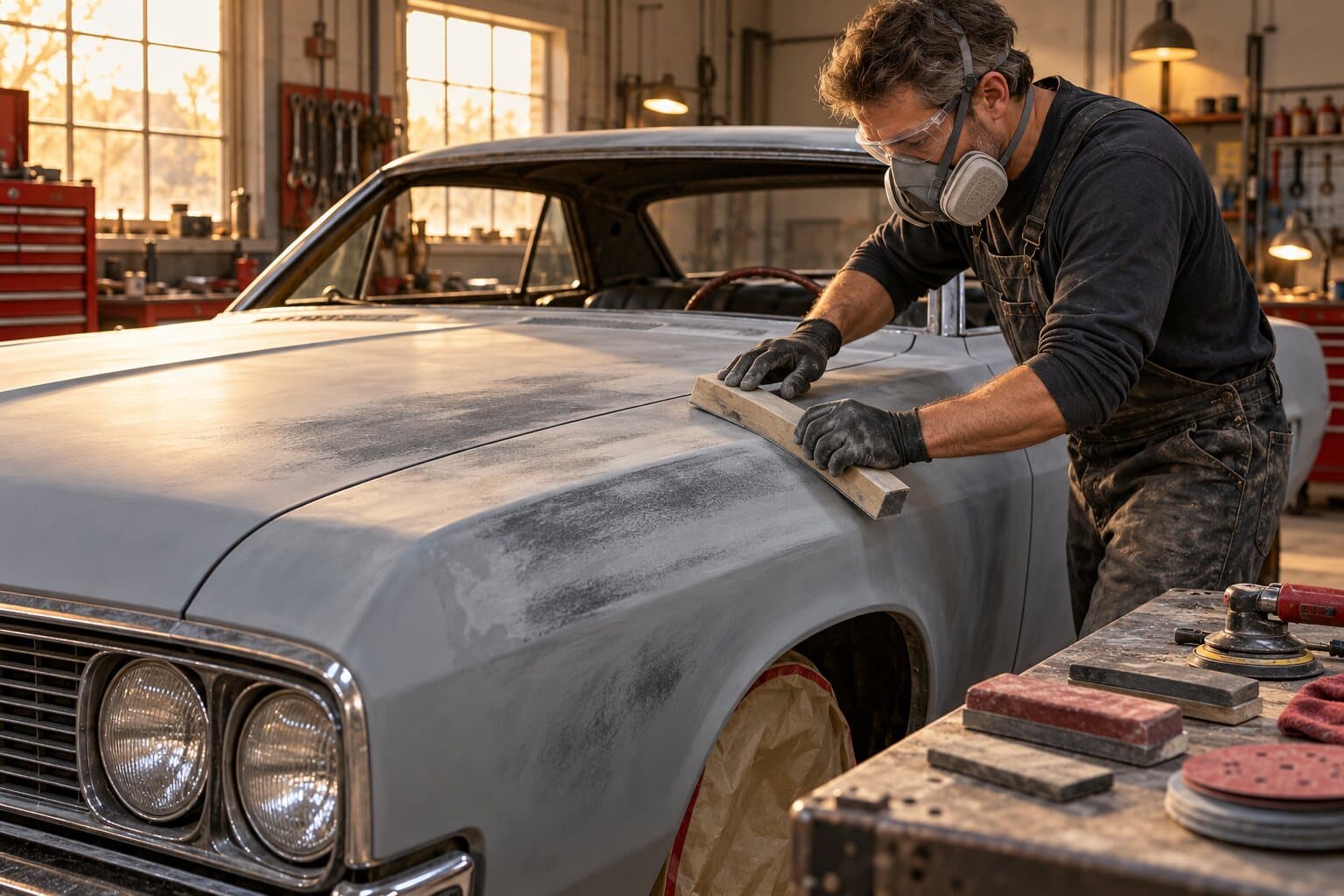
A sanding block that maintains the intended contour may look unimpressive beside a powerful sander, yet it can make the difference between a straight panel and a surface full of waves. The block should suit the panel’s shape, distribute pressure predictably and hold the abrasive securely.
Long blocks help reveal broad highs and lows. Flexible blocks can follow controlled curves. Small blocks reach details. No single block is correct for every panel.
The same principle applies to hammers and dollies. Balance, face condition and shape matter more than shine. A damaged hammer face can transfer marks into sheet metal. A dolly that does not match the contour can stretch the wrong area.
Body panel alignment taught the same lesson on a larger scale: the best tool is the one that helps us understand the structure before we force the surface.
Fitzgerald Classics pick: Flexible Automotive Sanding Block Set — helpful for following controlled curves while keeping panels straight during hand-blocking.
Inspection Lights and Mirrors
You cannot repair what you cannot see.
A useful inspection light spreads light evenly without creating so much glare that detail disappears. It should fit into tight spaces, resist common shop chemicals and stay where it is aimed. A magnetic base can help on steel structures, while a stable hook is often more useful around fiberglass cars.
Color rendering matters during paint and interior work. Brightness alone does not guarantee that wiring colors, surface defects or finish differences will be visible accurately.
Small mirrors, borescopes and headlamps can reveal casting numbers, hidden fasteners, connector damage and fluid leaks without unnecessary disassembly. Their value is measured in information gained and parts left undisturbed.
Fitzgerald Classics pick: Rechargeable Magnetic LED Work Light — useful when you need bright hands-free light in tight areas under dashboards, around wiring or beneath the car.
Power and Air Tools: Speed With Restraint
Power tools save time, but speed is not always a restoration advantage.
An impact wrench is excellent for disassembly when the fastener and surrounding component can tolerate it. It is not a substitute for proper starting, hand tightening or final torque. A compact electric ratchet can reduce repetitive effort, yet the user must still feel whether a fastener is cross-threaded.
Grinders, cut-off wheels and rotary tools should be judged by control, guarding, vibration and switch placement. A tool that is powerful but difficult to stop precisely can destroy original material faster than it removes corrosion.
Air tools remain effective, especially for sustained work, but require adequate compressor capacity, moisture control and safe hoses. Battery tools provide mobility and have improved tremendously, although battery cost and platform compatibility become part of the investment.
Review speed as a benefit only when the tool preserves control.
Specialty Tools: Buy, Borrow or Rent?
Some of the best tools in a restoration garage are used once every several years.
A harmonic-balancer installer, steering-wheel puller, spring compressor, flaring tool or model-specific gauge may be essential for one operation and irrelevant afterward.
Before buying, consider four options:
Buy when the task will repeat, correct use matters or availability would delay the project.
Borrow when the tool is simple, the source is trusted and the schedule is flexible.
Rent when a professional-grade tool is available and the job is infrequent.
Hire the operation out when setup, calibration or safety demands more experience than the project justifies.
The cost of ownership includes storage, maintenance and the temptation to use a marginally suitable tool simply because it is already on the shelf.
Budget Tools and Premium Tools
Price alone does not determine usefulness.
A budget tool can be an excellent choice for a low-frequency, low-risk operation. A premium tool can be worth every dollar when used constantly, when accuracy matters or when failure could damage an original component.
Spend more deliberately on tools such as:
Daily-use ratchets and wrenches.
Torque and precision measuring tools.
Electrical test equipment.
Lifting and support equipment.
Tools whose failure can injure someone or damage rare parts.
Save thoughtfully on tools whose task is simple, visible and easily verified. A specialty holding fixture used once may not require professional-shop pricing. Inspect it carefully, understand its limits and do not exceed its rating.
Brand loyalty is less useful than task loyalty. Buy the tool that performs the operation correctly and can be supported when something wears out.
Used and Vintage Tools
Older American-made tools can be beautifully constructed and may still provide decades of service. They also require inspection.
Look for cracks, sprung jaws, damaged chrome, mushroomed striking surfaces and worn drive mechanisms. Electrical tools should be treated cautiously if insulation, leads or internal protection are unknown. Measuring tools should be checked for zero, smooth movement and calibration.
A vintage tool can belong in a period-respectful garage without becoming decoration. But age does not automatically equal quality, and nostalgia should never override safety.
Maintenance Is Part of the Review
The best tool can become unreliable through neglect.
Clean tools before returning them to storage. Protect bare metal. Replace damaged leads and frayed cords. Keep precision tools away from grinding dust. Lubricate mechanisms according to instructions. Store torque wrenches properly and check calibration at appropriate intervals.
Before bench testing electrical components, inspect the test equipment itself. A weak clip, blown meter fuse or internally broken lead can create a false diagnosis.
Label questionable equipment immediately. A tool awaiting repair should not drift back into service because someone forgot why it was set aside.
Safety Equipment Belongs on the Tool List
Eye protection, hearing protection, gloves, respirators, jack stands and fire extinguishers are not accessories. They are tools that allow the work to continue safely.
Evaluate them with the same seriousness as a torque wrench. Are the stands rated and stable? Does the respirator use the correct cartridges? Are safety glasses clear enough that you will actually wear them? Is the extinguisher appropriate, charged and accessible?
A restoration is never improved by finishing a job faster at the expense of the person doing it.
Build the Garage in Three Layers
A practical restoration tool collection can grow in layers.
Layer One: Core Tools
Start with quality sockets, wrenches, screwdrivers, pliers, hammers, a multimeter, test light, torque wrench, inspection light, lifting equipment and dependable jack stands.
Layer Two: Project Tools
Add what the current automobile requires: line wrenches, pullers, trim tools, bodywork blocks, flare tools, timing equipment or model-specific sockets.
Layer Three: Precision and Specialty Tools
Invest in micrometers, dial indicators, advanced electrical equipment, presses and specialized fixtures when the work and your experience justify them.
This approach protects the restoration budget. Our guide to building a classic car restoration budget applies just as strongly to equipment as it does to parts and paint.
Common Tool-Buying Mistakes
Buying the largest set instead of the sizes the car requires.
Choosing maximum capacity over accuracy in the range actually used.
Treating an impact tool as a universal solution.
Buying precision equipment without planning for calibration.
Ignoring access, head size and handle swing.
Buying a specialty tool before checking rental or loan options.
Trusting included accessories that are weaker than the main tool.
Storing tools without cleaning, labeling or protecting them.
Assuming a higher price guarantees better suitability.
Letting a new tool replace the service manual and correct procedure.
Fitzgerald Insight
Tools have a way of making us feel prepared.
A full drawer looks reassuring. A large compressor sounds capable. A new meter with dozens of functions suggests that every electrical mystery can be solved.
But restoration has taught me that capability does not come from possession. It comes from understanding what the tool is telling us—and knowing when it is the wrong tool for the job.
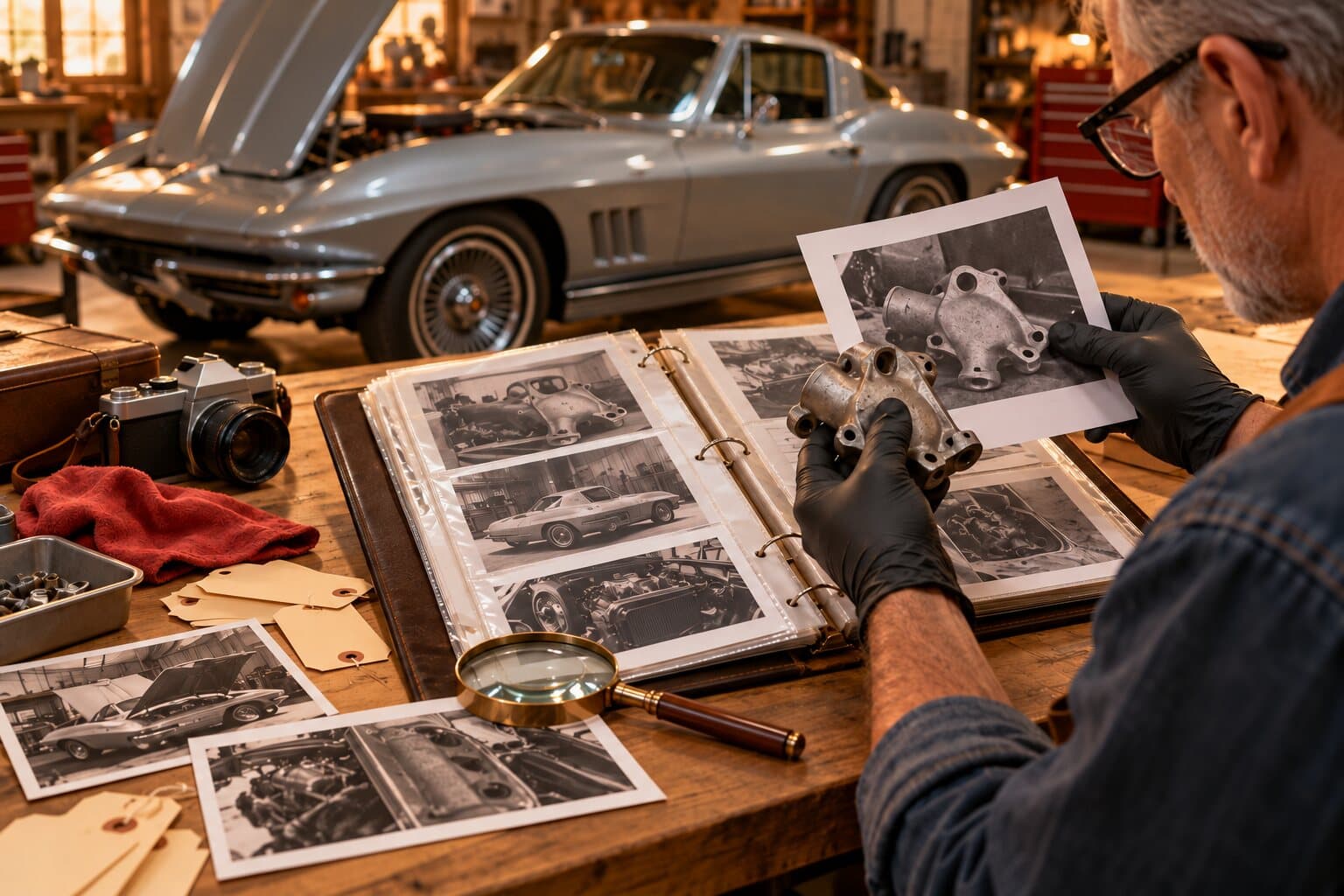
Some of the best decisions I have made in the garage involved setting down a powerful tool and reaching for something slower. A hand ratchet instead of an impact. A sanding block instead of a machine. A meter instead of a replacement part. A camera and notebook before disassembly.
The right tool does more than make the work easier. It helps us preserve evidence, control risk and respect the automobile.
That is the standard I want every tool in my garage to meet.
Frequently Asked Questions
Do I need professional-grade tools to restore a classic car?
No. Match quality to frequency, precision, safety and the consequences of failure. Premium equipment makes sense for daily-use, critical and calibrated tools. Carefully selected budget tools can serve well for occasional, easily verified tasks.
Which tool should a beginner buy first?
Begin with safe lifting equipment, core hand tools, good lighting, a service manual and basic electrical test equipment. Buy additional tools in response to specific jobs rather than trying to equip an entire shop at once.
Is a digital torque wrench better than a click wrench?
Not automatically. Both can be accurate when properly used, stored and calibrated. Choose the design whose range, access, feedback and service support fit the work.
Can I trust an inexpensive multimeter?
It may be suitable for basic work if it has appropriate protection, stable readings and dependable leads. Verify it against a known reference and understand its ratings before using current ranges or testing modern electronics.
Should I buy or rent specialty tools?
Buy when use will repeat or immediate availability matters. Rent or borrow expensive low-frequency tools when a reliable source exists. Hire out work when safe setup or calibration exceeds the project’s needs.
How often should tools be calibrated?
Follow the manufacturer’s guidance and consider use, storage, drops and overloads. Any precision tool that has been damaged or produces suspicious readings should be checked before critical work.
Choose Tools That Make the Restoration Better
A restoration garage does not need every tool. It needs the right tools, understood and maintained by someone willing to use them patiently.
Evaluate equipment by the quality of the result, not the size of the case. Spend where accuracy, safety and repetition justify it. Save where the task is simple and visible. Borrow when ownership adds little. Stop when a tool does not fit the operation.
The objective is not to build the most impressive garage.
It is to build better cars.
Continue the Fitzgerald Classics Journey
Explore Fitzgerald Classics for practical restoration guidance, real-garage lessons and documented project stories from the 1966 Corvette, 1963 Ford Galaxie 500 convertible and 1957 Nash Metropolitan.
Coming Next
Next Friday, the original Fitzgerald Classics 52-week editorial roadmap continues with:
Restoration Philosophy: What Does It Mean to Preserve a Classic Car?
We’ll explore originality, authenticity, safety, usability and the choices that separate preservation, restoration and modification—and why the “right” answer depends on understanding the automobile and your purpose for it.
About the Author
Dan Fitzgerald is the founder of Fitzgerald Classics, a Veteran-Owned automotive publication dedicated to preserving America’s automotive heritage through authentic restoration stories, practical technical guidance and hands-on experience. From documenting a numbers-matching 1966 Corvette to bringing a 1957 Nash Metropolitan back to life, Dan shares the discoveries, mistakes and lessons that happen in a real garage so other enthusiasts can approach their own projects with greater knowledge and confidence.
Preserving Americana... one classic car at a time.
Affiliate disclosure: Fitzgerald Classics may earn a commission from qualifying purchases made through links in this article, at no additional cost to you.
A quality 3/8-inch drive socket set belongs in nearly every restoration garage because it handles a huge percentage of routine mechanical work without becoming cumbersome.
A quality click-type torque wrench is essential when the job moves from disassembly to correct reassembly and proper fastener torque matters.
A rechargeable LED work light earns its place quickly because good visibility makes every repair, inspection, and adjustment easier.
Disclosure: Some links to products in The Garage are affiliate links. As an Amazon Associate, Fitzgerald Classics may earn from qualifying purchases at no additional cost to you.