Winter Storage Done Right: Protecting a Classic Car for Months
For many classic-car owners, winter storage is part of the rhythm of ownership.
The temptation is to wash the car, throw a cover over it, connect a battery charger and call it done. That is better than nothing, but several months of sitting can create problems that were not there when the car went into the garage.
A good storage routine is really about preventing small issues before they become expensive ones.
Here is the process I would use before putting a classic away for a few months.
Start With a Clean, Dry Car
Do not store the car dirty if you can avoid it.
Road grime, dust, bugs, moisture and residue can sit against paint, chrome and trim for months. Give the car a proper wash, dry it thoroughly and make sure water is not trapped in door jambs, around weatherstripping, under trim or in other low spots.
If the paint is in good condition, a fresh coat of wax or your preferred paint protectant adds another layer of protection while the car sits.
The same applies underneath. If the car has recently been driven in rain, on damp roads or anywhere road salt may have been present, clean the underside before long-term storage.
Fill the Fuel Tank and Stabilize the Fuel
A mostly empty tank leaves more room for moist air and condensation.
For a carbureted classic that will sit for months, I prefer storing it with a nearly full tank of fresh fuel and an appropriate fuel stabilizer mixed according to the product instructions.
After adding stabilizer, run the engine long enough for treated fuel to work its way through the fuel system.
That matters because the fuel in the lines, pump and carburetor needs protection too.
Modern ethanol-blended fuel can be especially troublesome in older systems because it can absorb moisture and is less forgiving of long storage periods.
If you know the car will be stored for an extended period, inspect old rubber fuel hose as part of the same routine. Aging hose can become brittle, cracked or soft whether the car is driven or not.
Change Dirty Oil Before Storage
Old engine oil can contain moisture, fuel dilution and combustion byproducts.
If the oil is already near the end of its service interval, changing it before storage makes more sense than letting contaminated oil sit in the engine all winter.
There is no need to create work simply for the sake of storage, but I would not intentionally put a car away for several months with oil that is obviously overdue.
While you are there, check the coolant level, brake fluid, power-steering fluid if equipped and transmission fluid where appropriate.
Storage is a good time to catch a slow leak before it becomes an empty reservoir by spring.
Protect the Battery Properly
A classic-car battery can lose charge while sitting, and repeated deep discharge is hard on battery life.
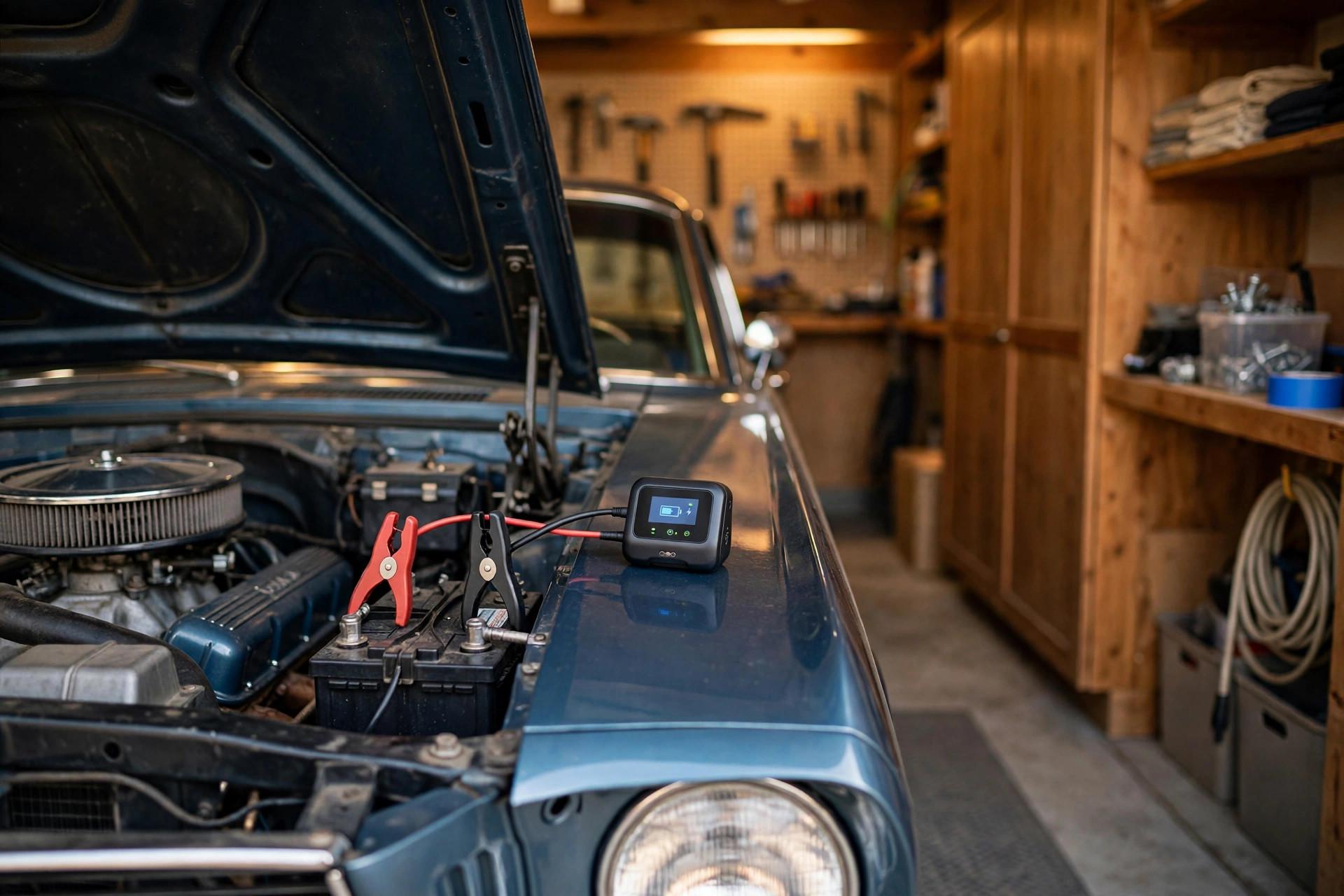
The easiest solution is a quality smart battery maintainer designed to stay connected for long periods.
The Fitzgerald Classics Garage currently includes several options intended for collector cars, including the NOCO GENIUS1, NOCO GENIUS5 and Battery Tender 3A charger/maintainer.
Explore Battery & Storage gear in the Fitzgerald Classics Garage
If you prefer to disconnect the battery instead, make sure the car does not rely on constant battery power for anything important.
On an older, mostly original car, that is usually straightforward. On a restomod with modern electronics, alarms or memory functions, it may not be.
Whatever method you use, inspect the terminals and cables before storage. Corrosion does not improve while the car sits.
Do Not Let the Tires Sit Neglected
Months in one position can contribute to flat spotting, particularly with certain older or softer tire constructions.
Start by inflating the tires to the correct pressure.
For a car that will sit for a long period, some owners add a few pounds within the tire manufacturer's safe limits or use tire cradles to spread the load.
Another option is to move the car slightly every few weeks so the same section of tire is not carrying the load the entire time.
I am less enthusiastic about putting a stored car on jack stands simply to unload the tires unless there is a specific reason. Suspension systems are designed to carry the vehicle's weight, and leaving a car hanging at full suspension droop for months is not automatically an improvement.
The key is proper pressure, a dry floor and periodic inspection.
Think About Moisture Inside the Garage
A closed garage is not necessarily a dry garage.
Humidity changes, concrete floors and temperature swings can all introduce moisture around a stored car.
If the garage is damp, a dehumidifier can be one of the best investments you make for the entire collection.
At minimum, avoid parking a car on a visibly wet floor and make sure the space has reasonable ventilation.
For cars stored in buildings with bare concrete, some owners use a vapor barrier or purpose-built parking mat beneath the vehicle to reduce moisture migration from the slab.
Watch chrome, bare metal, brake rotors and polished aluminum. They often show the first signs that the storage environment is too damp.
Use the Right Car Cover
A good indoor cover should protect the paint from dust without trapping moisture.
For indoor storage, I prefer a soft, breathable cover over a heavy waterproof outdoor cover.
Waterproof material can be useful outside, but inside a garage it can hold moisture against the car if the vehicle or air beneath it is damp.
The car should be completely dry before the cover goes on.
And if the garage is clean and secure, do not feel obligated to cover the car immediately after a drive. Let heat and moisture escape first.
Rodents Can Do More Damage Than You Think
Mice can turn a quiet stored classic into a very expensive spring project.
They are attracted to warm, sheltered areas, and a stored car offers plenty of them.
Check the garage for gaps and obvious entry points. Avoid leaving food, pet food or bird seed nearby.
Some owners use traps around the garage perimeter rather than placing poison inside the building, where a rodent can die in an inaccessible part of the car.
Before spring startup, inspect the air cleaner, exhaust outlets, cowl area, heater ducts and engine compartment for nesting material.
Wiring harnesses deserve special attention.
Do Not Start the Engine Just to Let It Idle
One of the most common winter-storage habits is starting the car every couple of weeks and letting it idle for ten minutes.
I would rather leave the car alone than do that.
A short idle session may not get the engine oil, exhaust system and drivetrain fully hot. Instead of removing moisture, it can create more condensation.
If you are going to exercise the car during storage, drive it long enough to bring the entire drivetrain up to full operating temperature.
If weather and road conditions do not allow that, leave it stored.
Leave the Parking Brake Off
If the car is parked on a level floor and safely chocked, I generally prefer not to leave the parking brake applied for months.
Brake shoes or pads can stick to drums or rotors, cables can remain under tension and moisture can make matters worse.
Use quality wheel chocks and leave the transmission in the appropriate gear or Park, depending on the vehicle.
A set of wheel chocks is inexpensive insurance in any garage, not just during storage.
Check the Exhaust and Openings
Make sure the exhaust system is dry before storage.
In areas where rodents or insects are a concern, some owners temporarily block exhaust tips and obvious intake openings.
If you do this, make the reminder impossible to miss.
A bright tag on the steering wheel that says REMOVE EXHAUST PLUGS BEFORE STARTING is much better than trusting your memory several months later.
The same rule applies to any cover over an intake or air cleaner opening.
Do a Final Walkaround
Before the car disappears under its cover, I like the idea of one last simple inspection.
Look for:
- Fluid leaks beneath the car
- Soft or cracked hoses
- Low tire pressure
- Corroded battery terminals
- Fuel odor
- Damp carpet
- Signs of rodents
- Loose windows or convertible-top seals
- Anything left plugged into the cigarette lighter or accessory socket
Take a quick photo of the odometer and the car in its storage spot.
That gives you a simple record of when and how the car was put away.
Keep a Small Storage Checklist With the Car
A written checklist prevents springtime guessing.
Mine would include:
- Fuel stabilized
- Oil checked or changed
- Battery maintainer connected
- Tire pressures set
- Parking brake released
- Wheel chocks installed
- Windows and top fully closed
- Rodent inspection completed
- Exhaust or intake plugs noted
- Cover installed only after car is dry
It takes a few minutes and can save a lot of aggravation later.
The Goal Is a Better First Drive in Spring
Good winter storage is not glamorous.
There is no horsepower gain and nothing to show off at a car show.
But it protects the work already invested in the car.
A properly stored classic should come out of winter needing a normal inspection, not a recovery project.
That is the real goal: turn the key in spring, check the fluids, verify the brakes and tires, and get back to enjoying the car.
Explore the Fitzgerald Classics Garage
Coming Next
Next Friday:
Battery Tenders, Disconnects, and Old-Car Electrical Storage
We will take a closer look at maintaining batteries during storage, when disconnect switches make sense, how parasitic draw affects older cars, and what changes when a classic has modern electronics added.
About the Author
Dan Fitzgerald is the founder of Fitzgerald Classics, a Veteran-Owned automotive publication dedicated to preserving America's automotive heritage through authentic restoration stories, practical technical guidance and hands-on experience.